Bedding
Published February 9, 2022
6 minPillow Stuffing Types: Down, Memory Foam, Polyester Compared
What's the difference, why it matters, and which is the best pillow type for your specific needs.
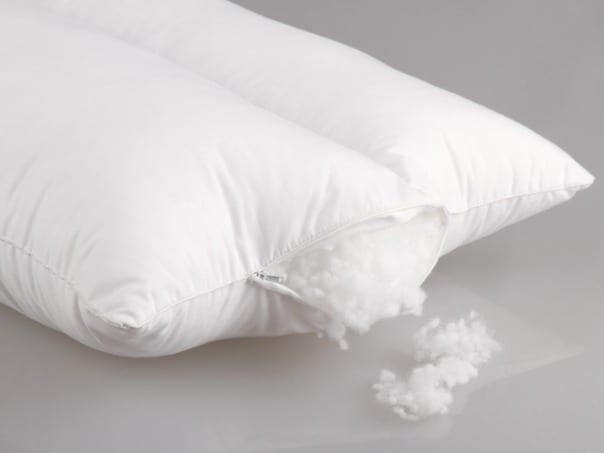
Table of contents
Down and Down AlternativeMemory FoamPolyesterLatexBuckwheatWhich Fill for Which SleeperSleep Position Is the Real Starting PointA Note on AdjustabilityFrequently Asked Questions
Most people spend more time picking a mattress than they do picking a pillow. Very understandable! Mattresses are an expensive, lasting purchase – but your pillow is where you lay your head every single night. Finding one that suits your needs matters, and makes a real difference in your sleep.A pillow’s fill determines how your head sits, how much heat builds up overnight, and whether you wake up with a stiff neck or just... don't think about your pillow at all (that’s the goal). And unlike mattress shopping, pillow shopping doesn't have to be complicated — once you know what each fill type actually does, the right choice for you gets pretty clear.
Down and Down Alternative
Down is the soft underfeathers of ducks or geese — the stuff that makes a pillow feel airy. It's light, compresses easily, and has a natural give that synthetic fills have been trying to replicate for decades.What it's good at: Down sleeps cool, reshapes itself when you move, and lasts a long time if you take care of it. It's the fill that stomach sleepers and restless sleepers tend to gravitate toward, since they can punch it into whatever shape they need.What it's not good at: Support. If you need your pillow to hold a specific shape all night — for neck alignment or shoulder clearance — down will gradually flatten under your weight. You'll wake up with your head closer to the mattress than you started. Also, genuine down certainly isn't cheap.The allergy question: A lot of people think they're allergic to down when they're actually reacting to dust mites that accumulate in the fill. This is something that’s worth checking before you rule it out entirely.Best for: Stomach sleepers who need something low and soft. Side sleepers who prefer to scrunch and fold their pillow into position rather than sleeping flat on it.Down alternative swaps the goose feathers for synthetic fibers engineered to feel similar — without the price tag or the animal products. They’re softer on the wallet, easier to wash, and hypoallergenic. The tradeoffs? They flatten faster and wear out quicker than the real stuff.Not sure which mattress fits you best? Find out now.
Memory Foam
Memory foam responds to heat and pressure: softening under your head, conforming to your neck and shoulder shape, and slowly bouncing back when you get up. Foam’s contouring quality makes it a go-to for people with neck pain. Instead of your neck adapting to the pillow, this pillow adapts to your neck.Memory foam pillows come in two main types. Solid memory foam holds a fixed shape all night — good if you know exactly which height you need, less so if you don’t. Shredded memory foam is looser and more adjustable, with a feel that sits somewhere between memory foam’s solidness and down’s airiness.What it's good at: Pressure relief, consistent support, and keeping its shape over time. Solid foam is especially reliable, night after night.What it's not good at: Temperature. Memory foam traps heat — it's the nature of the material. Solid foam is worse for this than shredded, though most modern memory foam pillows now have cooling fibers woven into the cover to counteract this.Best for: Side sleepers and back sleepers who need consistent lift, and anyone with neck or shoulder tension looking for a contouring feel.If you want the support of memory foam without the heat trap, Nectar's Tri-Comfort Cooling Pillow combines CertiPUR-US® certified memory foam clusters with microfiber fill — so it contours to your shape without packing into a dense, heat-holding block. Cooling fibers in the cover actively pull heat away, and the ComforZip™ gusset lets you dial in soft, medium, or firm support just by zipping or unzipping the sides.Polyester
Polyester fiberfill is the baseline when it comes to pillows. It's in most budget options: soft, washable, and does the job without requiring too much thought.What it's good at: Being inexpensive and easy to care for. Polyester fiberfill is hypoallergenic, machine washable, and light. Guest room pillows are almost always polyester for exactly these reasons.What it's not good at: Lasting. Polyester clumps and flattens faster than almost any other fill. The shape you bought it for likely won't be there in six months, and it also doesn’t offer any significant support.Best for: Stomach sleepers who want something flat and compressible, guest rooms, or pillows you're going to replace regularly without much thought.Latex
Latex has a feel unlike anything else on this list. Where memory foam slowly sinks and cradles, latex pushes back. It's springy and responsive qualities make you feel supported rather than enveloped. Some people love it immediately, but others find it too firm or too bouncy (and never quite adjust).What it's good at: Latex doesn't flatten. It has an open-cell structure that allows airflow, so it sleeps cooler than solid memory foam. It's also naturally resistant to dust mites and mold, which matters if you have allergies.What it's not good at: Being lightweight. Latex pillows are heavy, and often quite expensive. Also, the unique feel means they’re worth a try before you commit.Best for: Back and side sleepers who want firm, responsive support, and hot sleepers who need something more structured than down but more breathable than foam.Buckwheat
Buckwheat pillows are filled with the outer hulls of buckwheat seeds — small, firm, and quite unique. They hold their shape completely, don't trap heat (since air moves freely between the hulls), and you can add or remove fill to change the feel.The catch: buckwheat pillows are quite heavy, and make noise when you move.What it's good at: Customizable support, temperature neutrality, and holding loft without compressing. Once you set the height you want, it stays there.What it's not good at: Being quiet. Also, the firm feel isn't for everyone — if you want something soft and yielding, buckwheat may not be the right choice.Best for: Back sleepers who want firm, adjustable support, hot sleepers who run very warm, people who want a natural fill without the softness of down.Which Fill for Which Sleeper
| Fill | Feel | Support | Sleeps Cool? | Best For |
| Down | Soft, pliable | Low–medium | Yes | Stomach, side sleepers |
| Down Alternative | Soft, light | Low–medium | Moderate | Allergy-sensitive sleepers |
| Memory Foam | Contouring | Medium–firm | Depends on cover | Side, back sleepers |
| Polyester | Soft, fluffy | Low | Moderate | Budget, guest rooms |
| Latex | Springy, firm | Medium–firm | Yes | Back, side sleepers |
| Buckwheat | Firm, moldable | Firm | Yes | Back sleepers, hot sleepers |